check it out! - A SNEAK PEEK BEHIND THE SCENES OF OUR BIOCHAR PRODUCTION


%201.png)






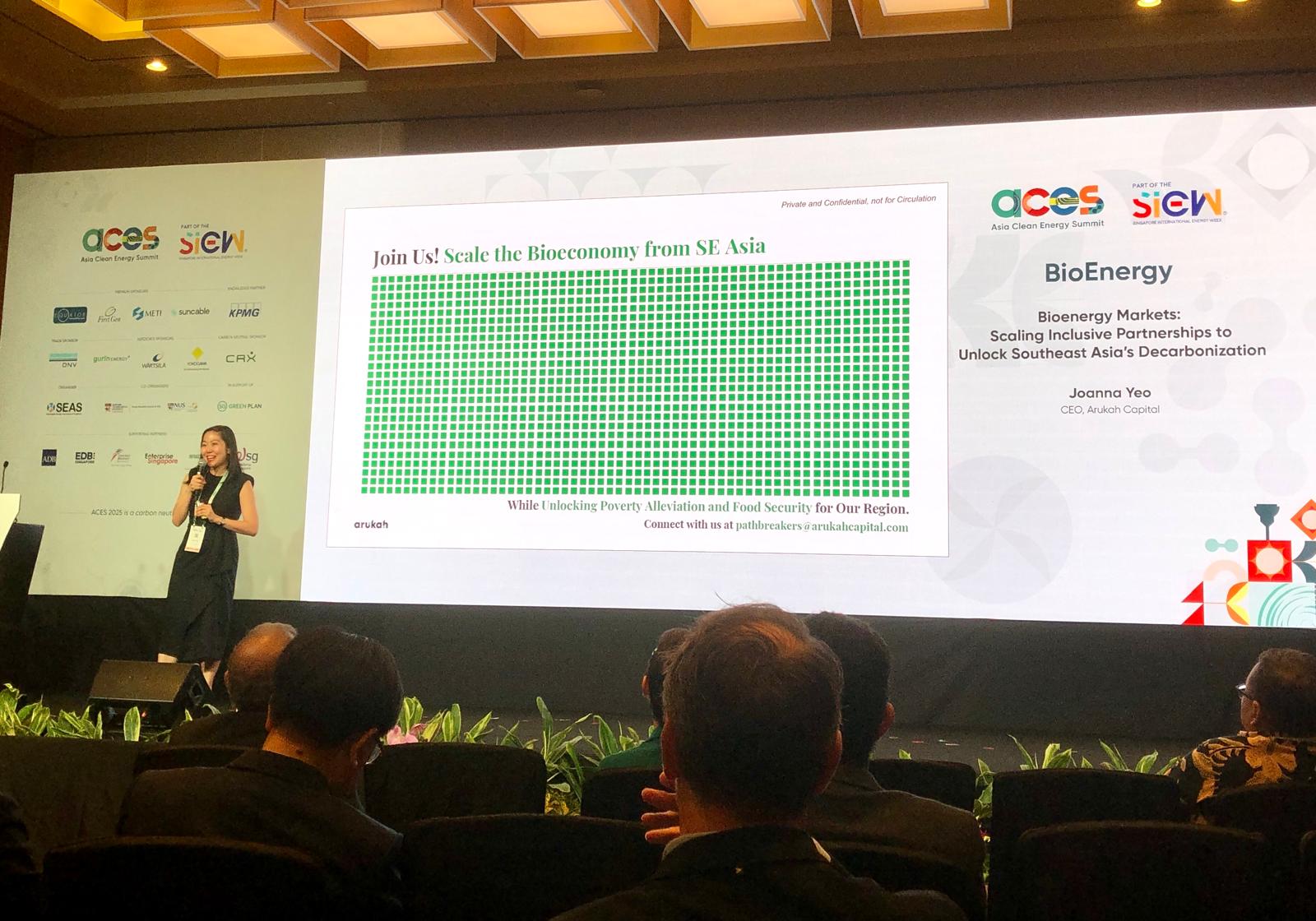
We were grateful to be invited to give the first keynote at the inaugural bioenergy track of the annual Asia Clean Energy Summit.
We shared our experience of practical pathways to scale Southeast Asia’s role in global decarbonization through inclusive, circular bioeconomy models grounded in our region's understanding of Gotong Royong - mutual aid and friendship.
In Arukah's experience, abundant agricultural biomass can be harnessed effectively to cut emissions and advance inclusive growth, without compromising food security. We also had the opportunity to share how our proprietary AI and computer vision-enabled digital tracking enables high-integrity verification and access to global markets, including a first in market computer vision tracking system for biochar plants.
Arukah's core focus on poverty alleviation, with a first in market 50% carbon revenue share to farmers for investment grade biochar and biogas projects has unlocked both policy support and reliable biomass supply - and increasingly global partnerships.
Our conviction is the SE Asian, Gotong Royong approach will be key to unlocking the circular bioeconomy at scale - watch this space!
Thank you to the organisers and the very expert audience for an engaging dialogue.
And if this model resonates with you as a buyer, financier or agribusiness / cooperative, please do reach out to explore collaboration at pathbreakers@arukahcapital.com.
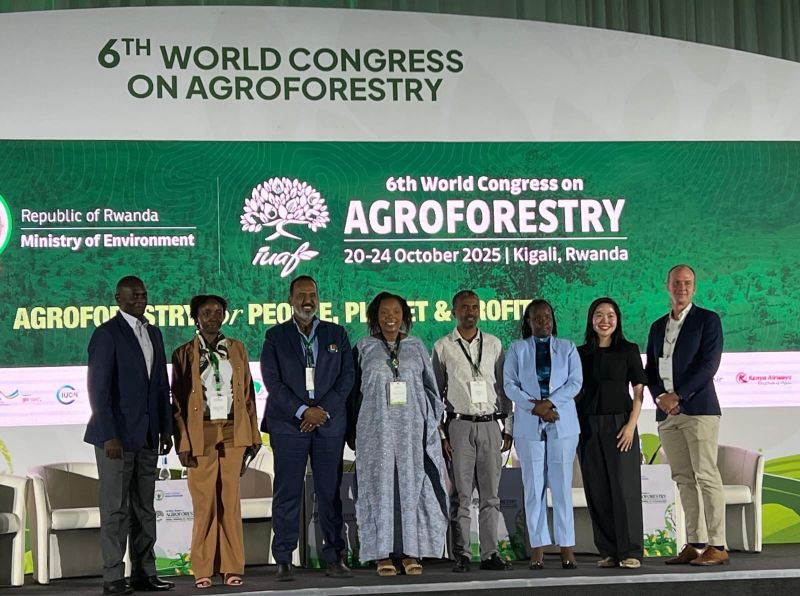
We are grateful to have shared Arukah’s vision at the 6th World Congress on Agroforestry in Kigali, Rwanda—the first time this landmark event has been hosted on the African continent. Our deepest appreciation to HE Dr. Bernadette Arakwiye and Dr. Eliane Ubalijoro for the invitation and for their visionary leadership in advancing high-integrity climate action from the Global South.
At Arukah, our model is built on a singular conviction: that poverty alleviation and high-integrity climate action are essential complements. In the Global South, climate prosperity must be shared at the roots. To ensure this, we commit 50% of carbon revenue directly to participating farmers—a model that has already shown up to a 450% improvement in carbon reduction compared to unpaid controls.
Our findings echo the observations of regional pioneers like the One Acre Fund: when farmers see tangible income gains, they choose trees. The economic case is clear—fruit and nut trees can deliver 8–10x higher income (within just 3 years of purchasing and planting seedlings) compared to traditional cash crops like maize.
By bridging the gap from local farmer action to global carbon markets - and back to local farmer incomes, Arukah ensures that the ecological value created by farmers is converted into the sustainable income needed for regenerative agriculture to thrive.
With over USD 1 trillion in sustainable finance seeking credible deployment, blended finance and catalytic partnerships are the only way to scale agroforestry at the speed the planet requires.
At this intersection, we see a critical role for “translators”—those who can bridge the gap between complex climate science, rigorous field practice, and institutional global capital. Rwanda, much like Singapore, is poised to be a global hub for the bioeconomy—small in geography, but bold in ambition and global collaboration.
We look forward to building these friendships and partnerships across borders. Because ultimately, big dreams are only made real when we build them together. 🌍